Māori Grammar
| Previous | Back | Next |
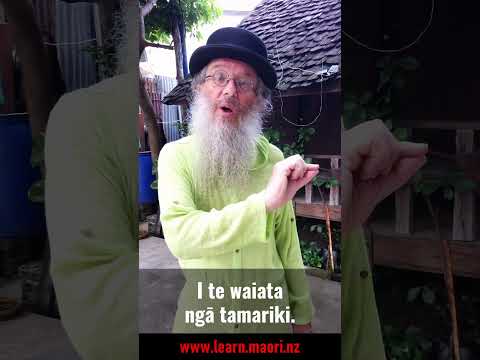
The tense marker i te is used to say that something was happening in the past:
I te oma au.
I was running.
This indicates continuous action - I must have been running for a duration of time.
Another tense marker indicates that something happened at a particular point in time, perhaps only once. This uses i as the tense marker:
I oma au.
I ran.
The difference between "I ran" and "I was running", or "she sang" and "she was singing" can be quite subtle, but one refers to continuous action and the other refers to a particular moment in time when an event happened.
Kei te kōrero ia.
She is talking.
I te kōrero ia.
She was talking.
I kōrero ia.
She spoke.
Kei te waiata ngā tamariki.
The children are singing.
I te waiata ngā tamariki.
She were singing.
I waiata ngā tamariki.
The children sang.
I rongo a Aroha i te kurī.
Aroha heard the dog.I pai tāna waita.
His singing was good.I haere koutou ki te aha?
What did you go for?I pakipaki te katoa me tō rātou kore e tino mārama ki tāua i kī ai.
Everyone applauded though they did not entirely understand what he had said.I haere a Hori ki te kanikani ki te kimi hoa wahine.
Hori went to the dance to look for a girlfriend.I whakatō i ētehi kai māori pērā i te kūmara me te kōkihi.
We planted native food like kūmara and native spinach.I tihewa ia i te pō roa nei.
She sneezed all night.I aha koe i te mutunga wiki?
What did you do in the weekend?I kai ngā tamariki i te parāoa.
The children ate the bread.I whiwhi paetae au.
I got achieved.I toro au ki ngā hoa.
I visited friends.I ngā rā o mua, mā te hōiho kē te moua e tō.
In former times, a horse pulled the mower instead.I haere ā tāua tamariki ki tō rātou wharekura.
Our children went to their school.I tino pai a Rangi.
Rangi was very good.I tono ahau kia mutu te tetū.
I ordered that the rowdy behaviour should stop.I pai. I au taku moe.
It was good. I slept well.I tipu au i Ahitereiria.
I grew up in Australia.I haere au ki te awa ki to hīkoi i te mutunga wiki.
I went to the river to go walking in the weekend.I whānau au i Poihākena, i Ahitereiria.
I was born in Sydney, Australia.I pakeke ake ia i Te Waipounamu.
He grew up in the South Island.I tae mai ia mā raro.
He arrived on foot.I tērā tau i hūnuku tōku whānau ki ngā roto o Kai Iwi.
Last year, my family moved to the lakes of Kai Iwi.I mahi au i te māra, ā, āe, i pānui pukapuka, ā, i tunu hoki au i te kai mā te whānau.
I worked in the garden, yeah, I read books and I cooked for the family.I kai au i taku parakuihi.
I ate breakfast.I kōrero a Tīmoti ki te whakaminenga.
Tīmoti addressed the assembled people.I tapahi a Marama i a ia.
Marama cut herself, or, Marama cut him.I waiho ahau i te koti ki tō whare.
I left the coat at your house.I pīrangi a Tau ki te haere hei mema pāremata.
Tau wanted to become an MP.I haere te kura ki te tāone ki te whakataetae mō te kapa haka.
The school went to town to compete for the kapa haka.I tae atu rātou ki reira me ā rātou pū.
They arrived there with their guns.I tae tōmuri mai ia i te pō rā.
He arrived late last night.I waiata rāua i te hui?
Kāore rāua i waiata i te hui?I kai koe i te aha i nāpo?
What did you eat last night?I karanga atu ki ngā manuhiri au.
I called to the guests.I kite au i te kurī i te pāmu.
I saw the dog at the farm.I pānui a Toa i tērā pukapuka.
Toa read that book.I kite a Tame i a ia anō.
Tame saw himself.I haere rāua ki te whare pikitia inanahi.
Those two went to the movies yesterday.I pēwhea hoki tō moe, e Mā?
How was your sleep, Mum?I mutu tōmua tātou i tēnei rā.
We finished early today.I pēwhea tō moe, tungāne?
How was your sleep, brother?I horoi pēpi au.
I washed baby.I hoatu a Mere i te keke ki tana tama.
Mary gave the cake to her son.I āwhina mai ia. He atawhai nōna.
She helped me, She is very kind.I uru ia ki te kura.
She entered the school.I haere au ki te pāka hei te hikoi.
I went to the park in order to walk.I noho ngā wāhine ki te marae.
The women stayed at the marae.I tākaro mātou i te kōti tuarua.
We played on the second court.I haere a Hemi ki te whare pikitia.
Hemi went to the cinema.I taraiwa māua ko taku hoa ki te whare wānanga i te waru karaka.
Me and my friend drove to uni at 8 o'clock.I aha koe i tēnei ata?
What did you do this morning?I haere mātou ki Rakiura inanahi.
We went to town yesterday.I ngā hōtoke kei ngā raorao, kei ngā mānia, ā, i ngā raumati kei ngā maunga.
In the winter they were on the foothills and on the plains, and in the summer they were in the mountains.I hiainu koe.
You were thirsty.I konei rāua i nanahi.
They were here yesterday.I aha koe inapō?
What did you do last night?I oma te tama ki te kura.
The boy ran to school.I oma mai te katipō nō raro mai i te takapau.
The spider ran out from under the mat.I taku taenga atu ki te kāinga, kua maoa kē i a ia ngā kai.
When I got home, he had already cooked dinner.I noho au i reira i tērā tau.
I stayed there last year.I tākaro poitūkohu au.
I played basketball.I tū tētahi tamaiti tāne.
A certain boy stood.I pātōtō tonu ia i runga i te tēpu.
She kept knocking on the table.I kauhoe atu ia ki te motu.
He swam to the island.I hīkoi ia ki te kura.
She walked to school.I whakatā māua i te whare.
We (me and one other) rested at the house.I haere au ki te pāka ki te hikoi.
I went to the park to walk.I pekepeke te tamaiti i te taiapa.
The child jumped backwards and forwards over the fence.I pahure atu au i te whare.
I walked past the house.I āhua wera koe.
You were somewhat hot.I kaha taku kai.
I had lots to eat.I tiki au i ngā tamariki.
I got the kids.I kite koe i te pirihimana?
Kāore koe i kite i te pirihimana?I haere rātou ki te ngahere inānahi.
They went to the forest yesterday.I whānau mai au i Whakatamacr;ne.
I was born in Whakatamacr;ne.I rangona e koe tērā haruru?
Did you hear/feel that rumble?I tiaki tamariki au.
I looked after kids.I haere au ki te whare horoi kākahu.
I went to the laundry.I tāraia te waka ki te toki pounamu.
The canoe was carved with a jade adze.I tērā pō, ka tae mai ētahi manuhiri.
Last night, some visitors arrived.I haere au ki to awa ki to hīkoi, i toro auto ki tōku hoa, ā, i kai tahi hoki me tōku whānau.
I went to the river to go walking, I visited my friend and I are together with my family.I hoko a Rangi i te waka.
Rangi bought the car.I hīkoi au me te kurī.
I walked the dog.I haere ia ki te tāone.
She went to town.I tatari mātou i te kēti.
We walked by the gate.I noho rātou ki te kāinga o Taika.
They stayed at Taika's home.I kite a Honi i te katipō.
Honi saw a katipō.I kite au i tērā tamaiti tāne.
I saw that boy.I pou māua i ētahi rākau māori: he tōtara, he tarata, he kōwhai hoki.
We planted some native trees: tōtara, tarata and kōwhai.I noho au ki te mahi.
I stayed and worked.I āhua makariri a Hēmi.
Hēmi was somewhat cold.I tino hiamoe ahau.
I was very sleepy.I haere rāua i te tahataha awa.
They walked beside the river.I kai au tahi me...
I ate with...I tupu hoki ahau i reira.
I also grew up there.I mahi kai mātou i mua i te hui.
We prepared food before the meeting.I tauomaoma rātou e rua maero i te one.
They had a race for two miles along the beach.I tākaro teihana tākaro au.
I played Play Station.I whara au taku waewae.
I hurt my leg.I hiakai ia.
He or she was hungry.I waruwaru rīwai au.
I peeled spuds.I Kohitātea ka whakatā tonu mātou.
We always take our holidays in January.I pātōtō ia i runga i te tēpu.
She knocked on the table.I haere koe ki te toa?
Kāore koe i haere ki te toa?I haere au ki te whare horoi kākahu.
I went to the laundry.I pai taku moe, tuahine.
My sleep was good, sister.I taku whare te hui.
The meeting was at my place.I titiro atu ia ki te rā, ka tihewa.
He look at the sun and sneezed.I whakaakona māua ki te raranga harakeke e tō māua kaiako.
We (2 exclusive) were taught to weave flax by our teacher.I rapu haere ia i ana kī.
He went around looking for his keys.I haere au ki te kauhoe.
I went for a swim.I kite au i a rātou e hī ika ana.
I saw them fishing.I mahi poka noa au ki te keri i te whenua, ka kohete mai ia, 'E tama e! Me taki karakia i te tuatahi'.
I heedlessly started digging and she growled at me, 'Boy! You should do karakia first!'I pēnei anō te tītere o te moana inanahi nei i tēnei rā.
The sea yesterday was as rough as it is today.